«ՀՆՉՅՈՒՆԻ ՀԱՅԿԱԿԱՆ ԴՊՐՈՑ»
ՀԱՏՈՒԿ ՆԱԽԱԳԻԾ «ARKA NEWS» ՄԵԴԻԱ ԳՈՐԾԱԿԱԼՈՒԹՅԱՆ ՀԵՏ
We created the project «Armenian School of Sound» in collaboration with Arka News Agency to share the story of the great Armenian violin school and its rich tradition — from past masters to the voices shaping its future.

The initiative was centered around the Publication of the first in history Armenian edition of Carl Flesch’s legendary book The Art of Violin Playing, published in Armenian for the first time. Its release offered an opportunity to revisit the legacy of the Armenian violin school and present it to a wider audience.
Thanks to this collaboration, the project reached a broad audience of 250,000+ people and received strong interest and positive feedback, highlighting the importance of professional media support for cultural and educational initiatives.
Article Name
Languages
Social Media Reach
(telegram channels)
Article
Views
Links
When the Violin Speaks Armenian:
A New Chapter in Music Education Opens in Armenia
Armenian
Russian
English
19 874
579
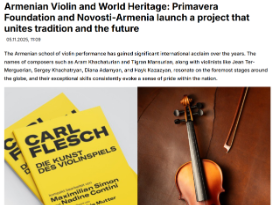
Armenian Violin and World Heritage: PrimaveraFoundation and Novosti-Armenia Launch a Project That Unites Tradition and the Future
Armenian
Russian
English
15 633
207
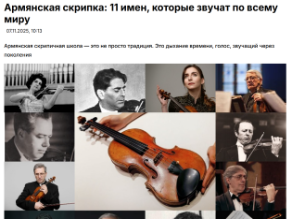
Armenian Violin: 11 Names That Resound Around the World
Armenian
Russian
23 502
1440
Music Lessons That I Remember: Survey Results
Armenian
Russian
16 561
270
TEST. Armenian Music: From Komitas to Khachaturian – How Well Do We Know Our Maestros
Armenian
Russian
15 132
342
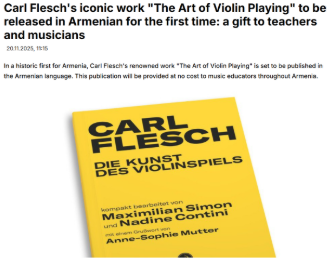
Carl Flesch’s iconic work “The Art of Violin Playing” – in Armenian for the first time: a gift to teachers and musicians
Armenian
Russian
English
16 672
392
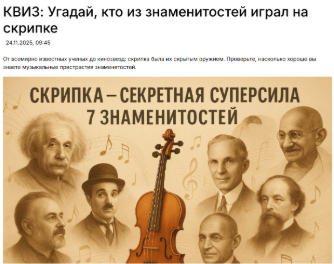
QUIZ: Guess which celebrity played the violin
Armenian
Russian
18 635
432
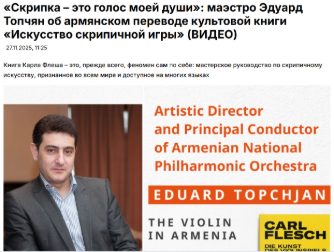
“The violin is the voice of my soul”: Maestro Eduard Topchyan on the Armenian translation of the iconic book “The Art of Violin Playing”
Armenian
Russian
16 354
234
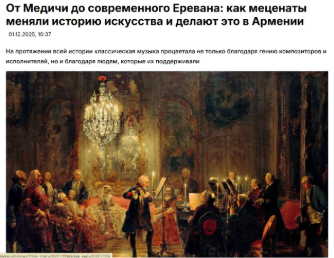
From the Medici to Modern Yerevan: How Patrons Changed Art History and Are Doing the Same in Armenia
Armenian
Russian
12 635
256
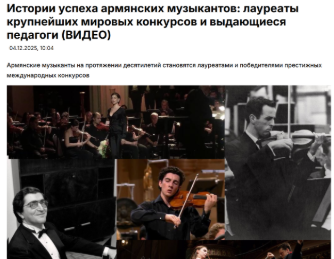
Success Stories of Armenian Musicians: Laureates of Major World Competitions and Outstanding Teachers
Armenian
Russian
23 172
1335
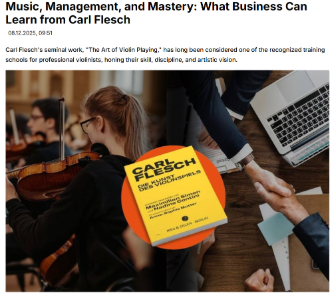
Music, Management, and Craftsmanship: What Business Can Learn from Carl Flesch
Armenian
Russian
English
19 088
520
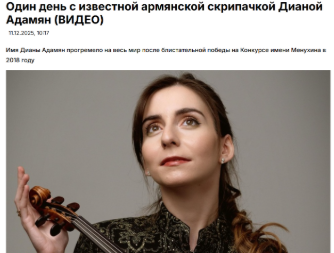
One day with renowned Armenian violinist Diana Adamyan
Armenian
Russian
25 540
1604
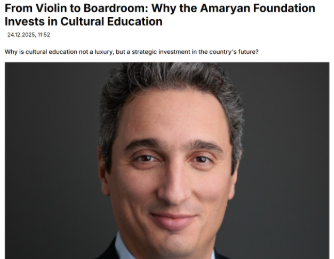
From Violin to Boardroom: How Investments in Culture Shape Armenia’s Human Capital
Armenian
Russian
English
34 522
2802
Cultural projects are not only about the final outcome, they are about the process, research, and challenges behind them.
In this interview with Mari Makichyan, Head of Digital Media at the Primavera Charitable Foundation who led the project’s communication and media work, we discuss the journey of the project, the discoveries made along the way, the challenge of presenting complex cultural material in an engaging and accessible format, and the broader importance of supporting cultural initiatives in Armenia today.

What did you learn from the project?
Since the project was dedicated to the Armenian release of Carl Flesch’s The Art of Violin Playing, we used the chance to talk about the legendary Armenian violin school itself. It was especially strong and famous during the Soviet period and produced many remarkable musicians and teachers.
While working on the project, I spent a lot of time researching the history of this school and the people who shaped it. I discovered names that aren’t talked about much today but had a huge impact on classical music in Armenia. Many of these professors and musicians trained generations of violinists and helped build a very strong teaching tradition. For me, this was one of the most interesting parts. It let me see Armenian musical culture from a deeper historical view.
At the same time, working with the team from Arka News Agency was a great learning experience. As media pros, they always think about the audience and how to present info in a way that grabs interest and keeps people engaged. Watching their approach helped me get better at sharing cultural and educational topics so they’re informative and fun for a wider crowd.
What was the most challenging task?
The most challenging part was finding a way to present such a rich and complex tradition in a format accessible to a broader audience. The Armenian violin school has many important figures, stories, and historical developments, so we had to carefully choose which aspects and personas to highlight.
But, we asked for advice on specific questions from professors at Yerevan State Komitas Conservatory, which made this much easier and ensured the project stayed accurate while still appealing to a wider audience.
What was the most unexpected and surprising thing during the project production?
One of the most interesting discoveries for me was the audience’s response. I expected interest from musicians and people involved in classical music, but it was very encouraging to see that the wider Armenian public was also curious and engaged.
Many people shared positive comments and expressed genuine interest in learning about the personalities behind the Armenian violin tradition and the history of the school. It was a reminder that audiences really appreciate cultural and educational content when it is presented in a clear and engaging way, and it showed that there is a strong interest in discovering or rediscovering important parts of Armenia’s cultural heritage.
What do you believe to be its result?
There is very little local content on topics like this, and even less in the form of structured projects rather than one-off articles. Already, we can see clear results from this project. The audience’s response was very positive, and the numbers speak for themselves. We reached over 270,000 people, which shows there is a strong interest in high-quality cultural content.
During the project, we also published an article on the history of arts patronage worldwide, showing that anyone can support cultural initiatives today. This helped connect the historical perspective with practical ways for the audience to engage and contribute. So, in the longer term, I think the project can influence how people approach supporting and funding cultural initiatives in Armenia.
Which piece of content do you personally like the most?
My favorite piece of content was the article “From the Medici to Modern Yerevan: How Patrons Changed the History of Art and Continue to Do So in Armenia.” I really enjoyed creating it because it allowed me to explore the role of patrons throughout history, and show how their investment in culture shapes society.
It was also important found to highlight the Armenian edition of Carl Flesch’s The Art of Violin Playing as a modern example of patronage, showing that today anyone can support the arts, not just royals or aristocrats. For me, the article was a reminder that culture thrives when people actively contribute to it, and that even small efforts, whether donating, sharing, or promoting projects, can have a lasting impact on future generations.